
Igor Tikovoï is a composer and music producer born in Moscow, trained in classical repertoire, who shifted towards pop, alternative rock, and electronic music. The son of singer Lio and director Alexis Tikovoï, he has built a professional path that far exceeds the family narrative relayed by the tabloid press.
Classical Training in Moscow: The Technical Foundation of Igor Tikovoï
Igor Tikovoï’s musical journey begins with academic learning. Born in Moscow, he grew up in an environment where classical music training was the primary framework for learning. This technical foundation, focused on harmony, counterpoint, and orchestration, has given him an uncommon ease in structuring complex arrangements.
This classical background explains a particularity of his work: the ability to layer elaborate sound textures in pieces that remain accessible. While many pop producers work by ear and through reference, Igor Tikovoï possesses a harmonic vocabulary that allows him to propose unexpected directions to the artists he collaborates with.
The pivot to pop, rock, and electro has not erased this initial training. He has absorbed it, transforming it into a production tool. A profile like composer Igor Tikovoï, son of Lio remains quite rare in the Francophone music landscape, where producers from classical conservatories who transition to popular music can be counted on one hand.
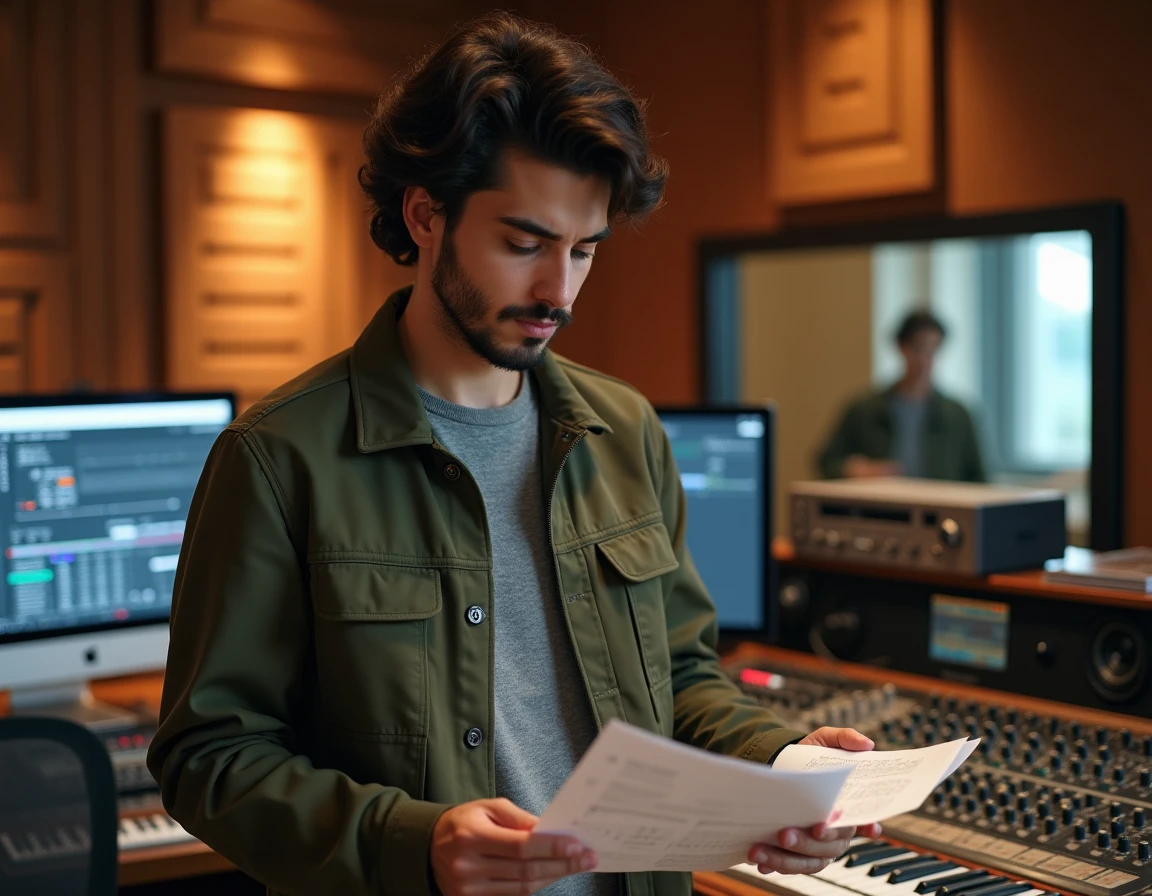
Collaborations with Placebo, Goldfrapp, and Mylène Farmer: A Long-Term Producer
Articles dedicated to Lio’s family often mention Igor in a few lines, without detailing his activities. His discography tells a different story. Igor Tikovoï has ensured the production or co-production of entire albums for international artists, with a creative role that extends over several years.
Among the names associated with his work are Placebo, Goldfrapp, Mylène Farmer, Vanessa Paradis, and Moby. These are not one-off collaborations limited to a remix or a bonus track. The work with Placebo, for example, involves a continuous presence in the creative process, from pre-production to final mixing.
A Co-Creator Role, Not a Technician
The distinction between a producer who executes an artist’s ideas and a producer who co-constructs the sound identity of a project is fundamental. Igor Tikovoï falls into the latter category. His versatility (classical, rock, electro) allows him to intervene in very different registers without imposing a uniform sound signature.
- With Placebo and Goldfrapp, he works with rock and electronic textures, bringing a harmonic depth inherited from his classical training.
- With Mylène Farmer, the framework is that of large-scale French pop, where production requires technical mastery and attention to arrangement details.
- With Moby and Vanessa Paradis, the universes are more intimate, requiring a different approach to sound and space.
This ability to navigate between opposing aesthetics without repeating oneself is the hallmark of a producer whose background goes beyond mere technical know-how.
Igor Tikovoï Beyond the “Son of Lio” Narrative
The media treatment of Igor Tikovoï remains largely filtered through the family prism. The search results concerning him almost all relate to Lio, her children, and family dramas. Igor’s musical work appears only as a footnote, when mentioned at all.
This distortion is common for the children of public figures who operate in the same field as their parents. The problem, in the case of Igor Tikovoï, is that his work as a composer and producer is anything but anecdotal. Collaborating sustainably with artists like Placebo is not a matter of family connections.
A Musical Lineage, Not a Social One
Lio marked French pop in the 1980s with hits that became classics. Igor Tikovoï has not sought to replicate that legacy. His classical training in Moscow, his orientation towards Anglo-Saxon alternative rock and electro place him in a very different register from that of his mother.
The link between the two paths is more structural than stylistic: an early familiarity with the studio, an intuitive understanding of how the music industry works, and likely an artistic demand passed down from a background where music was not a leisure activity but a profession.

Composer and Producer: Two Distinct Professions in One Journey
Composing and producing do not require the same skills. The composer writes the music, the producer shapes the sound. Igor Tikovoï combines both roles, giving him extensive control over the final result of a piece or album.
In composition, he intervenes on melody, harmony, and structure of the pieces. In production, he makes decisions about sound choices, instrument placement in the mix, and vocal treatment. When one person assumes both roles, the coherence between musical intention and sound realization is stronger.
This dual positioning remains relatively rare in Francophone production, where specialization is the norm. Producers who also compose tend to impose a recognizable sound from one project to another. Igor Tikovoï’s uniqueness lies in adapting his palette to the project, without seeking to impose a systematic personal sound signature.
Igor Tikovoï’s trajectory illustrates a frequent paradox in the music industry: the most versatile artisans are often the least visible to the general public. His discography speaks for him, even if search engines still prefer to associate his name with that of his mother.