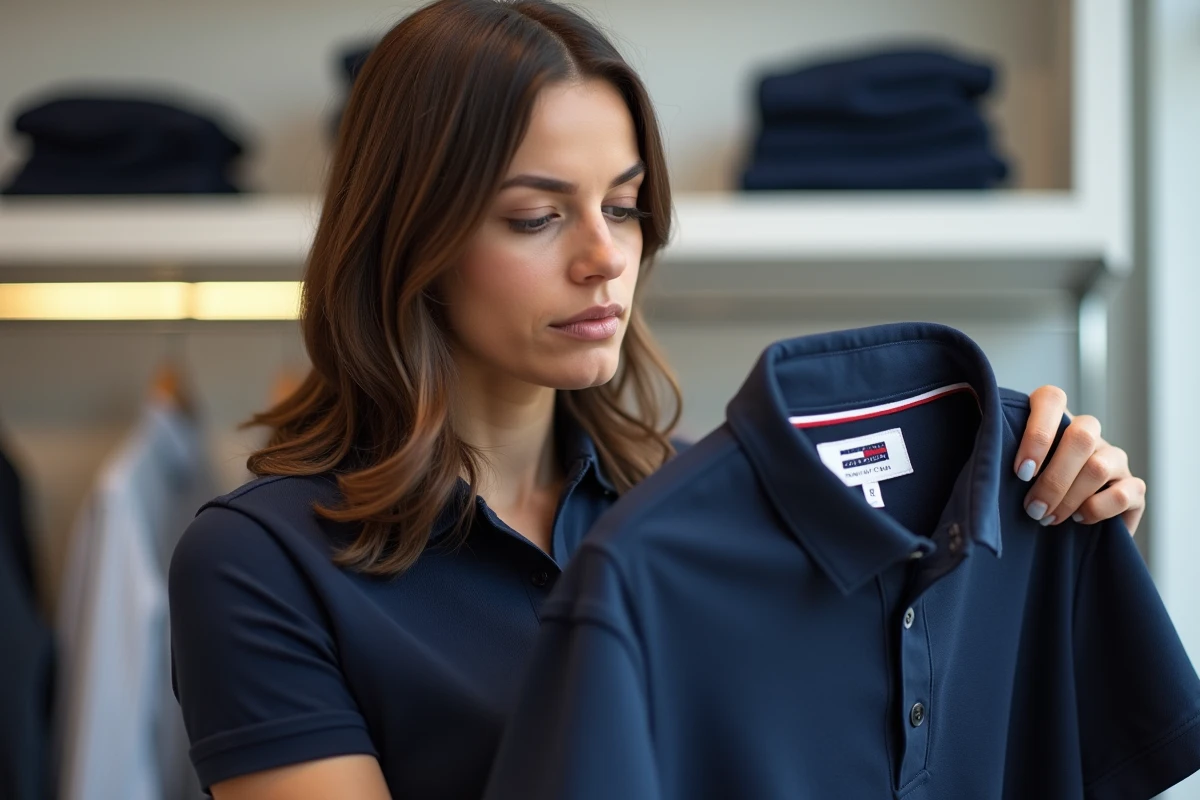
The second-hand market has exploded in recent years, along with the volume of counterfeit Tommy Hilfiger items in circulation. On Vinted, Leboncoin, or Depop, listings are multiplying without the buyer always being able to distinguish an original from a copy. Recent fakes have become more sophisticated, with some using artificial intelligence-assisted reproduction techniques to imitate labels and logos with a precision that seriously complicates visual authentication.
Tommy Hilfiger Counterfeiting and Artificial Intelligence: Why the Eye is No Longer Enough
Counterfeits from the 2010s were relatively easy to spot: approximate colors of the flag, misaligned typography, poorly printed labels. This is no longer the case. Reports from authorized resellers indicate a resurgence of fakes described as ultra-realistic, where AI reproduces logos and labels with disturbing fidelity.
This evolution makes purely visual verification methods increasingly unreliable. An embroidered logo may appear flawless to the naked eye on a recent counterfeit, whereas it systematically showed defects a few years ago. To find details about the Tommy Hilfiger label with Geopolitis, one must now cross-reference multiple clues rather than relying on a single criterion.
The direct consequence: a buyer who merely looks at the logo on the chest or the flag in the collar no longer has sufficient guarantees. Authentication requires a multi-criteria approach, examining textile quality, interior finishes, and traceability markings simultaneously.
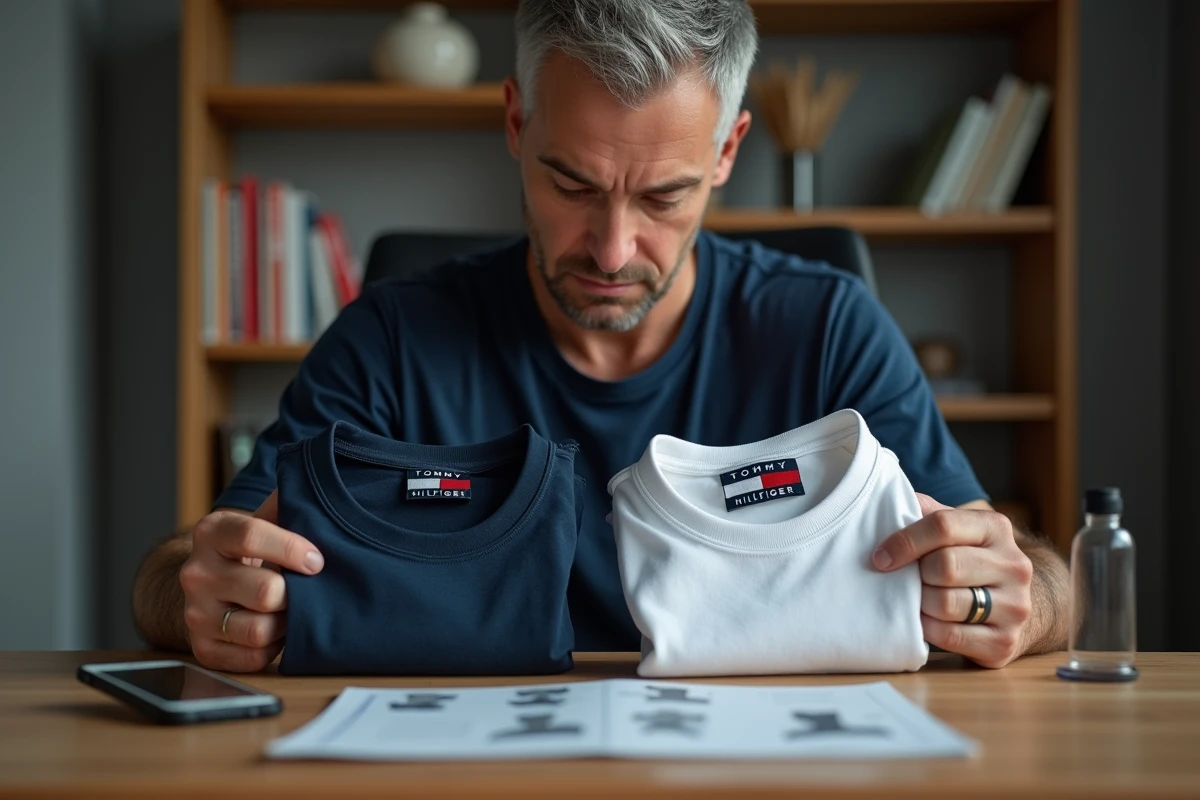
Label, Stitching, and Tommy Hilfiger Logo: The Control Points That Endure
Despite the rising quality of fakes, some clues remain more difficult to reproduce than others. They do not guarantee anything in isolation, but when combined, they significantly increase the reliability of authentication.
The Collar Label and the Tricolor Piping
On an authentic garment, the label sewn into the collar features a white and red piping with clean edges, along with regular stitching. Counterfeits, even recent ones, often reveal a misalignment in this piping or a label fabric that feels slightly rougher to the touch.
The Care and Composition Label
The care label is the most underestimated control point. On an original, it mentions the country of manufacture, precise composition, and a product reference code. The typography is fine and consistent. On a fake, the information is often incomplete, the font slightly different, or the text poorly centered.
The Embroidered Logo on the Chest
The Tommy Hilfiger flag embroidered on the chest must display bold colors (red, white, navy blue) without smudging between the stripes. The threads should be neatly cut at the back of the fabric. A messy embroidery back, with threads crossing chaotically, almost always indicates a counterfeit.
- Check the regularity of the side and shoulder seams: on an original, they follow a straight line without visible deviation, with a constant number of stitches per centimeter.
- Compare the fabric weight: an authentic Tommy Hilfiger t-shirt or sweater feels significantly heavier than a copy, which typically uses thinner cotton or a less dense synthetic blend.
- Observe the quality of the packaging and cardboard tags if the item is new: fakes often feature shinier paper, a non-functional barcode, or errors in the legal mentions.
Reselling Tommy Hilfiger Counterfeits on Vinted: What French Law Says
Buying a fake unknowingly is one thing. Reselling it is another, and the legal consequences are rarely anticipated by casual sellers.
Under French law, the sale of counterfeit goods is a criminal offense, even without fraudulent intent. Article L716-9 of the Intellectual Property Code provides for penalties of up to several years in prison and heavy fines for selling products bearing a counterfeit mark. Ignorance that the item was a fake does not automatically constitute an absolving excuse in court.
In practice, prosecutions against individuals reselling a single item remain rare. Customs and anti-counterfeiting services primarily target serial sellers. However, a complaint filed by the brand itself can target any seller identified on a platform.
How to Legally Protect Yourself When Reselling
- Keep the original proof of purchase (invoice, order confirmation, exchange of messages with the previous seller) to demonstrate good faith in case of a dispute.
- Never mention the Tommy Hilfiger brand in a listing if there is any doubt about the authenticity of the item. Selling a “type” or “style” garment without naming the brand reduces legal risk.
- Immediately report the item to the platform if a buyer or another user raises doubts about its authenticity, rather than discreetly removing the listing.
The entry into force of the Digital Services Act (DSA) in 2025 has strengthened the obligations of European platforms. Vinted, Leboncoin, and their equivalents must now implement more effective mechanisms to detect and remove counterfeit listings before they go on sale. This increased responsibility of the platforms does not relieve the individual seller of their own duty of vigilance.
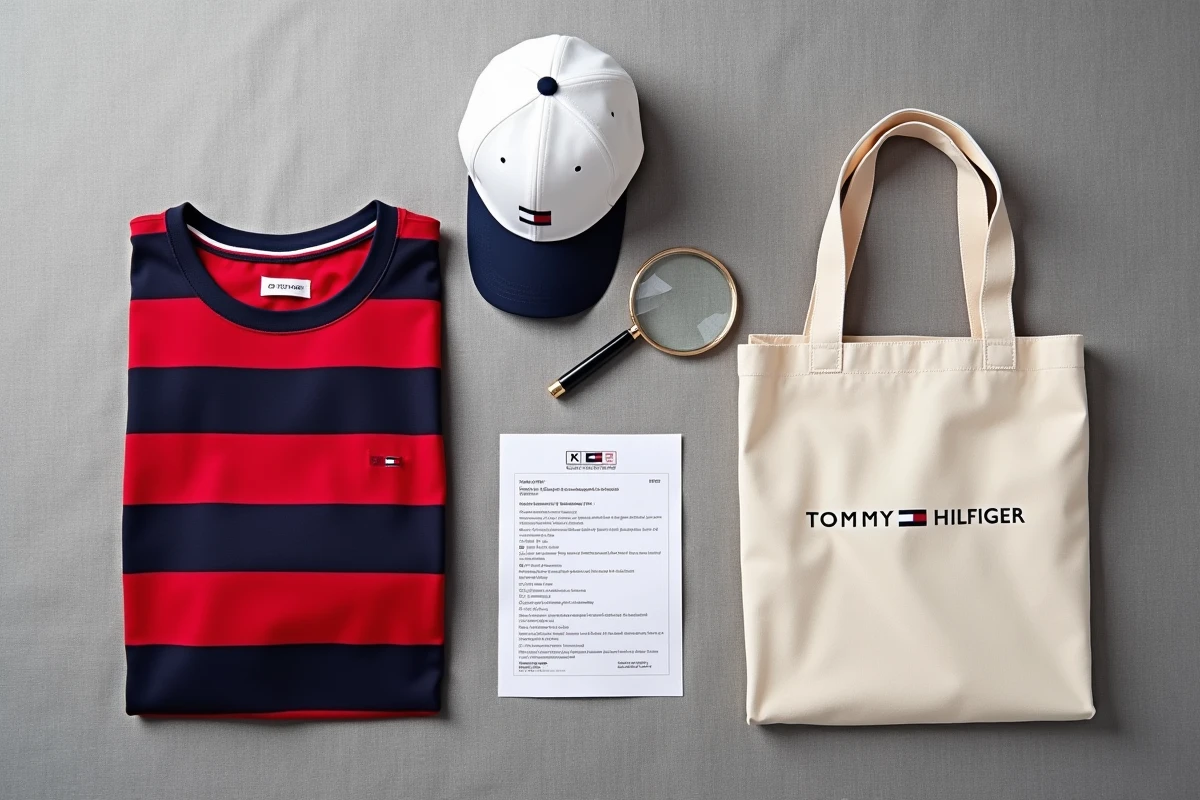
Buying Tommy Hilfiger Online: Recommended Channels and Those to Avoid
The official Tommy Hilfiger website and authorized physical stores remain the only channels where authenticity is guaranteed. Major multi-brand retailers (like Zalando, ASOS) also offer authentic items through verifiable distribution agreements.
Chinese marketplaces like Temu or Shein have concentrated a growing share of reports of Tommy Hilfiger counterfeits since 2024. The abnormally low price (often less than a third of the official rate) is the first warning sign, but some sellers set prices deliberately close to the market to lend credibility to their copies.
In the second-hand market, caution dictates that detailed photos of the collar label, care label, back of the embroidery, and interior seams should always be requested. A seller who refuses these pictures or makes excuses for forgetting should raise all interest in the transaction.
Authenticating a Tommy Hilfiger garment today relies on a bundle of clues, not a single criterion. The increasing sophistication of counterfeits requires combining physical examination, verification of distribution channels, and, for resale, a clear awareness of the applicable legal framework.