
Cooking tasty dishes during the week with a half-empty refrigerator and less than thirty minutes to spare: that’s the real daily challenge. So-called “easy” recipes abound online, but most assume a well-stocked pantry and a preparation time that far exceeds what one can afford on a Tuesday evening.
This article measures what separates a truly feasible recipe from one simply labeled as such, by comparing formats and concrete constraints.
Quick Weeknight Recipe: What “Easy” Means in Practice
The word “easy” covers very different realities depending on culinary sources. Some recipes touted as simple require ten ingredients, several of which are often unavailable at the local supermarket. Others demand specific equipment (mandoline, immersion blender, cast iron pot).
A realistic weeknight recipe relies on three measurable criteria: the number of ingredients, the active time spent at the counter, and the number of utensils needed. When applying these filters, the majority of “easy” recipes fail the daily test.
| Criteria | Classic “Easy” Recipe | Realistic Weeknight Recipe |
|---|---|---|
| Number of Ingredients | 8 to 12 | 5 or fewer |
| Active Preparation Time | 20 to 40 min | Less than 15 min |
| Specific Utensils | 2 to 3 | None (pan, pot, cutting board) |
| Rare or Specific Fresh Ingredients | Often 1 to 2 | None (substitution possible) |
This table is not a value judgment. More elaborate recipes have their place on the weekend. However, for everyday cooking, limiting ingredients to five transforms the feasibility of a meal. This is the most determining constraint, well ahead of cooking time.
Those who wish to explore cooking on À Nos Petits Fourneaux will find formats designed around this accessibility logic.
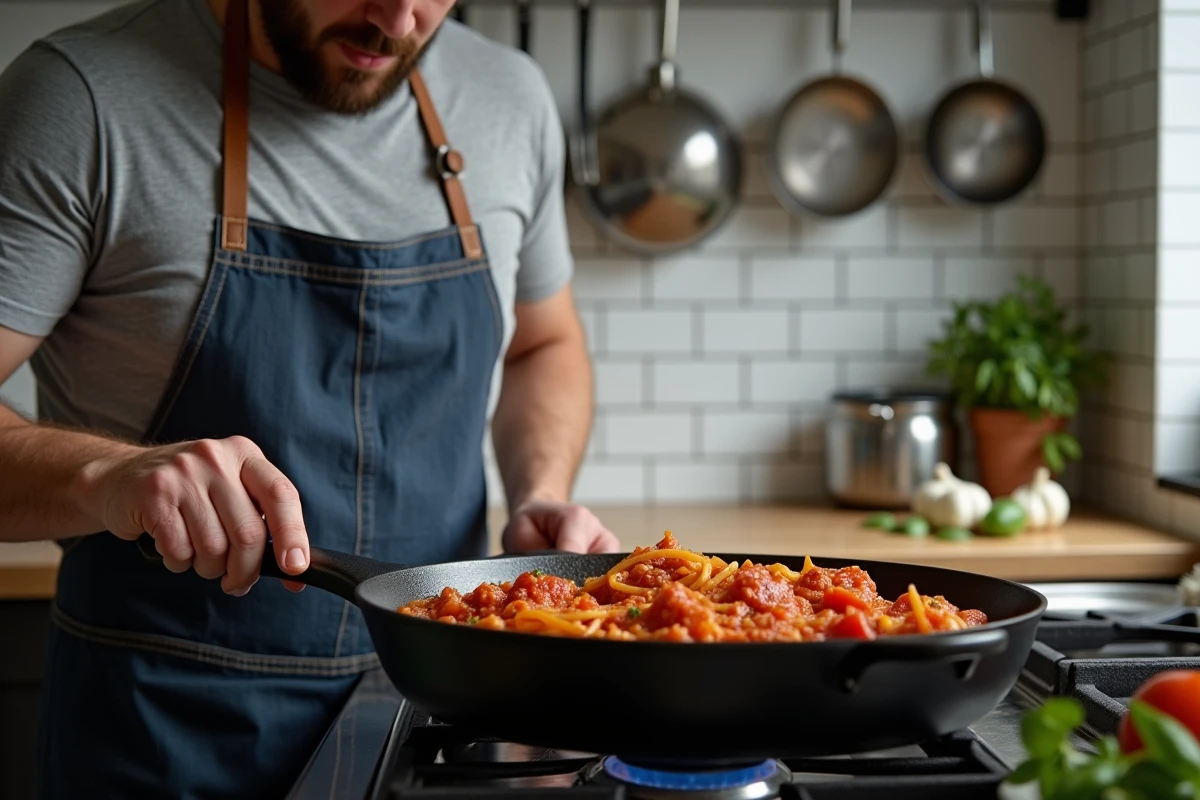
Seasoning and Spices: Gaining Flavor Without Adding Complexity
The most cost-effective reflex in quick cooking is seasoning. A plain rice dish with toasted cumin and a squeeze of lemon is worlds apart from the same rice served plain. The action takes a few seconds, requires no additional fresh ingredients, and radically changes the outcome.
Recent culinary content confirms this trend: spices and citrus replace lengthy techniques to add depth to a dish. Rather than simmering a sauce for an hour, a spoonful of smoked paprika in a sautéed vegetable preparation produces a comparable result in terms of taste satisfaction.
Three Combinations That Work with Common Ingredients
- Cumin, lemon juice, and olive oil on rice, lentils, or canned chickpeas: a complete meal in under ten minutes, using products found in any pantry
- Paprika (or sweet pepper), garlic powder, and plain yogurt in an express marinade for chicken or fish: the marinade works even in a few minutes and adds flavor without elaborate sauce
- Dried herbs (thyme, oregano) with a splash of balsamic vinegar on roasted vegetables: caramelization does the rest of the work
None of these combinations require a trip to a gourmet grocery store. A pantry with six basic spices covers the majority of the world’s cuisines: cumin, paprika, turmeric, chili, cinnamon, oregano. It’s a one-time investment that lasts for several months.
Weeknight Meal Planning: A Revised Batch Cooking Approach
Batch cooking, often presented as the miracle solution, is based on a simple principle: prepare several components on Sunday to assemble quick meals during the week. The format works, but it assumes a commitment of two to three hours on the weekend that many households do not have.
A more realistic approach is to prepare not full dishes, but two or three neutral bases that can be reused over several days. A batch of cooked rice, a tray of roasted vegetables, and a simple protein (hard-boiled eggs, poached chicken) can be combined differently each evening depending on the seasoning chosen.
Evening Meals with Leftovers: The Assembly Logic
On Monday, the rice accompanies roasted vegetables with soy sauce. On Tuesday, the same vegetables end up in a warm salad with an egg and vinegar. On Wednesday, the leftover rice becomes fried rice with whatever is lying around in the refrigerator.
This assembly logic reduces both waste and mental load. One no longer searches for “what to cook tonight,” but rather “how to combine what is already prepared.” The nuance may seem minimal, but it changes the perception of the daily meal.
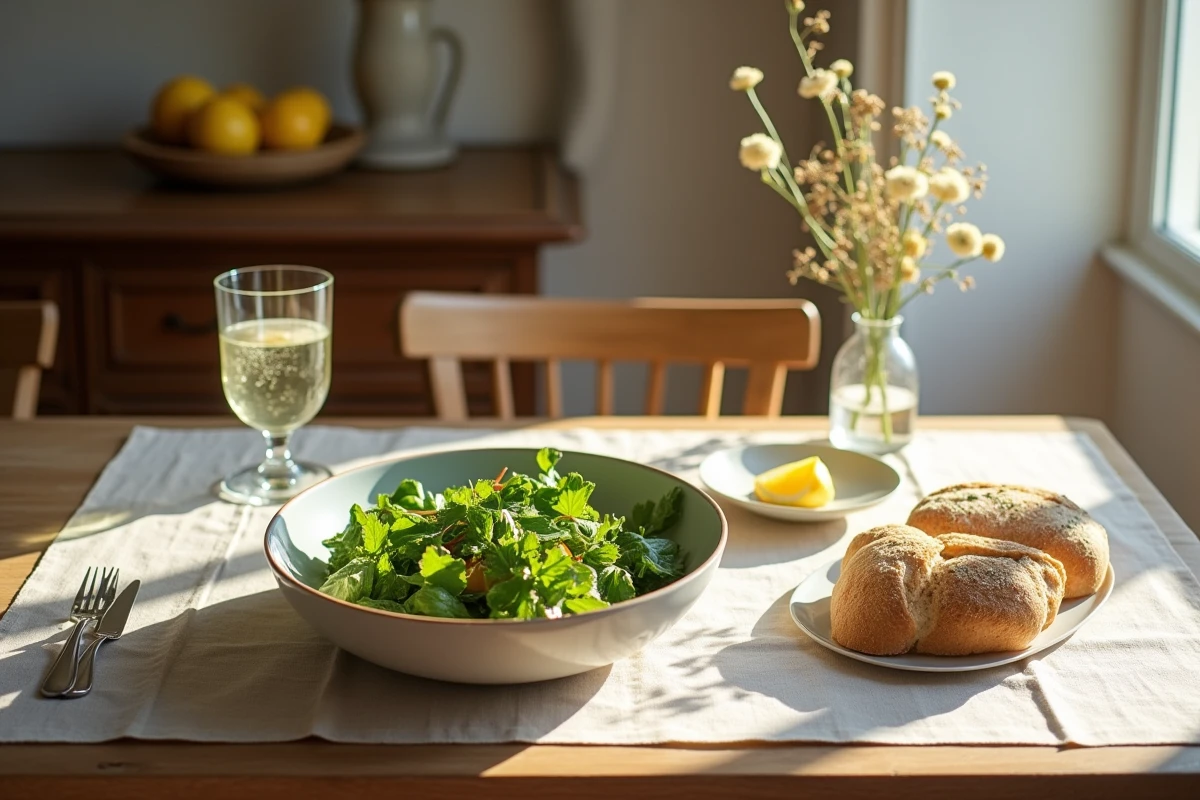
Everyday Cooking Without a Recipe: When the Format Becomes a Hindrance
Following a recipe involves reading, measuring, and adhering to an order. For an elaborate dish, this is necessary. For a weeknight dinner, cooking without a fixed recipe frees up time and mental load.
The principle relies on patterns rather than instructions. A typical pattern: a base (pasta, rice, bread), a protein (egg, legume, leftover meat), a vegetable (raw or cooked), a seasoning (spice, sauce, citrus). The combination varies each day without ever requiring a screen consultation.
“Weekly menu” formats remain useful for those who prefer a framework. Conversely, hurried cooks who master three or four basic patterns no longer need to search for a recipe every evening. The shift from recipe to pattern is probably the most underestimated time saver in home cooking.
Tasty everyday cooking depends neither on the number of recipes consulted nor on the complexity of techniques employed. It relies on a decent spice pantry, a few bases prepared in advance, and the ability to assemble rather than follow instructions. The most successful meal of the week is often the one that didn’t require searching online.