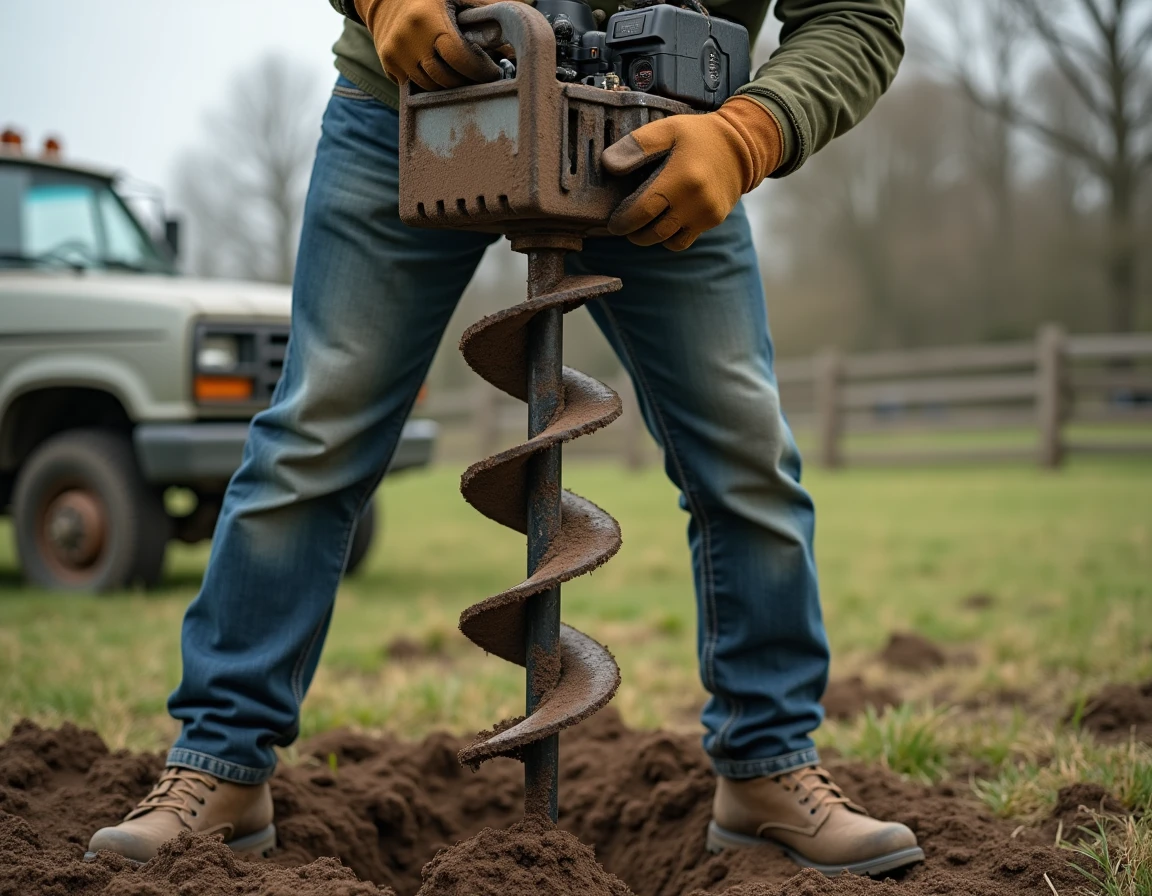
Drilling a well in your garden to access the water table remains an operation accessible to individuals, provided they master a few technical and regulatory parameters. The thermal auger is the tool most often recommended for this type of domestic drilling. The principle seems simple: screw a motorized bit into the ground, add extensions, and line the hole.
The reality of the site depends on the terrain, the desired depth, and administrative constraints that most online guides address in footnotes.
Pollution of the aquifer and sealing of the well: the risk that the thermal auger does not solve
The majority of content on the subject focuses on the choice of the bit, the diameter of the hole, or the rotation technique. However, the most critical technical point for the durability of a domestic well lies between the surface and the aquifer: the watertight separation between the surface layers and the aquifer.
A poorly sealed well creates a direct pathway between runoff water (fertilizers, pesticides, wastewater) and groundwater. Tubing alone is not enough. A peripheral seal is required, usually made with a cement or bentonite grout injected between the tube and the wall of the well, along the entire height of the non-aquifer layers.
With a thermal auger, the diameter of the hole exceeds that of the final tube by only a few centimeters. This reduced annular space complicates sealing for an individual without injection equipment. Anyone considering digging a well themselves with a thermal auger should anticipate this technical aspect even before choosing the diameter of their bit.
Soil nature and real limits of the thermal auger
Product sheets often present the thermal auger as suitable for “all types of soil.” Field feedback is more nuanced.
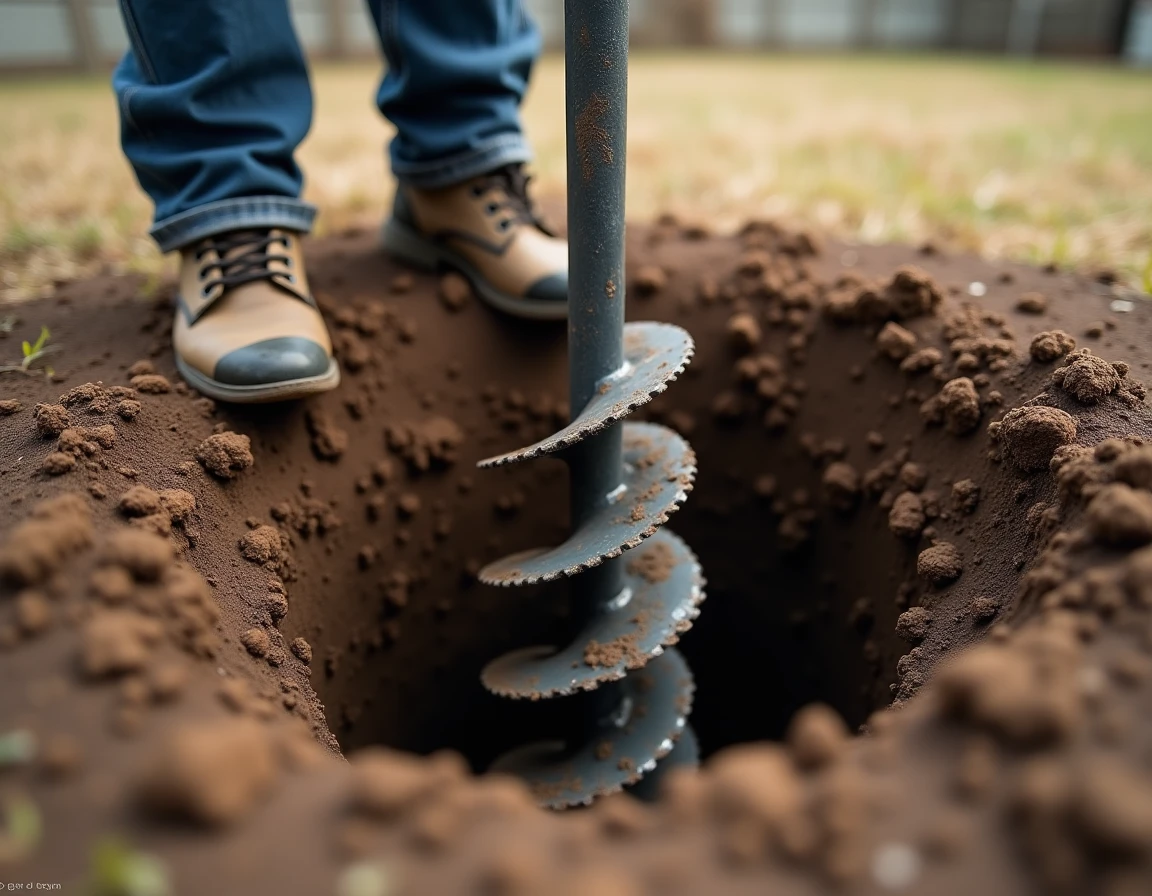
On loose soil (sand, topsoil, silt), progress is quick and steady. The removal of spoil occurs naturally by rising along the helical bit. This is the ideal scenario.
On compact clay soil, the bit tends to clog. It needs to be frequently pulled up to clear the earth, which significantly extends the duration of the drilling. Wet clay sticks to the bit and reduces the useful torque, even on a properly sized motor.
On gravelly soil or in the presence of rock blocks, the thermal auger reaches its limits. A medium-sized stone can block rotation and cause a violent jolt to the operator’s wrists. Beyond a certain density of stones, drilling becomes impractical without professional rotary equipment.
- Sandy or silty soil: smooth progress, the thermal auger delivers its best performance
- Clay soil: drilling possible but slow, frequent cleaning of the bit, risk of clogging the hole
- Gravelly or rocky soil: high probability of blockage, risk of breaking the bit or extensions
- Mixed soil (alternating layers): transitioning from a loose layer to a hard layer can misalign the drilling
Before starting, consulting local hydrogeological data (geological maps from BRGM) allows for assessing the actual feasibility of the project. An incompatible soil renders the thermal auger useless, regardless of the model chosen.
Declaration at the town hall and metering obligations for a domestic well
French regulations require a declaration at the town hall for any groundwater extraction structure for domestic use. This obligation is often mentioned in passing in drilling guides, while it conditions the very legality of the well.
The declaration must be made at least one month before the start of work. It concerns all drilling, including those intended solely for garden irrigation.
A device for measuring the volumes extracted may be required depending on the use and flow rate. This changes the economic equation: the cost of the meter and its installation adds to the initial budget, and monitoring the volumes consumed becomes a recurring constraint.
Failing to declare your well exposes you to penalties. In the event of proven pollution of the aquifer from an undeclared structure, the owner’s liability is unequivocally engaged.
Realistic depth of a thermal auger drilling
The available data on the maximum achievable depth varies by source. Some manufacturers claim high capacities due to the addition of successive extensions. In practice, several factors limit the descent well before reaching these theoretical thresholds.
Friction increases with depth. The longer the train of extensions, the more the torque required to maintain rotation exceeds the motor’s capacity. Beyond a few meters, the useful power drops significantly.
The removal of spoil also becomes problematic: in deep drilling, the earth no longer rises naturally along the bit. Water must then be injected to fluidize the residues, which requires additional equipment (surface pump, injection hose).
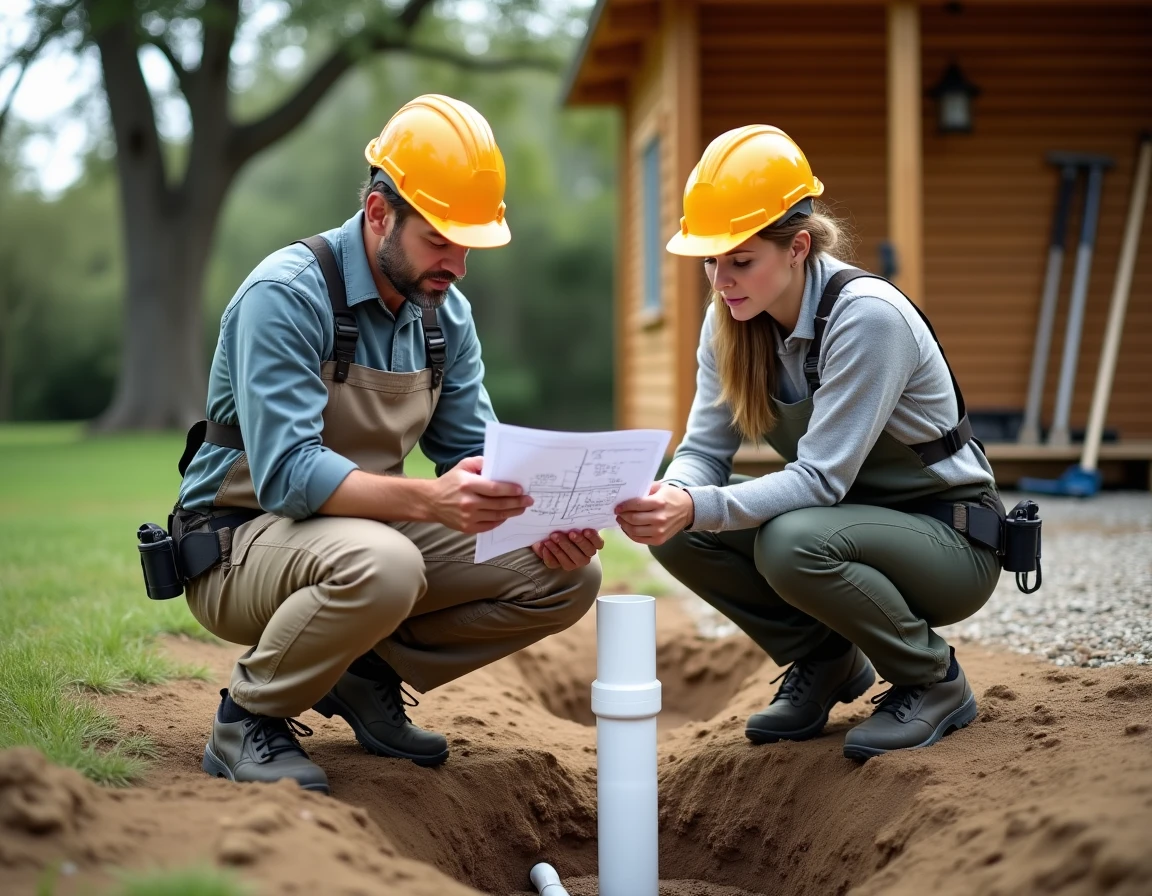
For an individual equipped with a standard thermal auger, drilling remains relevant at moderate depths, in favorable soil. Beyond that, resorting to a professional driller with a rotary drill becomes more reliable and, paradoxically, sometimes less costly once the time spent and materials consumed are accounted for.
Tubing and screen: what determines the longevity of the well
Once the hole is drilled, the tubing protects the walls from collapsing and isolates the layers of soil traversed. PVC tubing is the most common choice for a domestic well. Steel tubing offers better mechanical resistance but is more expensive and can corrode over time.
- The pre-tube keeps the hole open during drilling, then it is removed after the installation of the final tube
- The screen (perforated section of the tube) is placed at the level of the aquifer to allow water in while filtering out sand
- The filter pack (graded gravel) fills the space between the screen and the wall of the well to improve flow
A poorly sized tubing or a screen placed too high reduces the well’s flow to nothing. The exact position of the screen depends on the depth at which the soil becomes moist during drilling, a marker that only direct observation during work can confirm.
Drilling a well with a thermal auger remains a feasible project for a motivated individual, on suitable terrain and for a reasonable depth. The limits of the exercise depend less on the tool than on the soil, the regulatory framework, and the quality of the tubing. Underestimating any of these three parameters turns a hoped-for saving into an unfinished project.