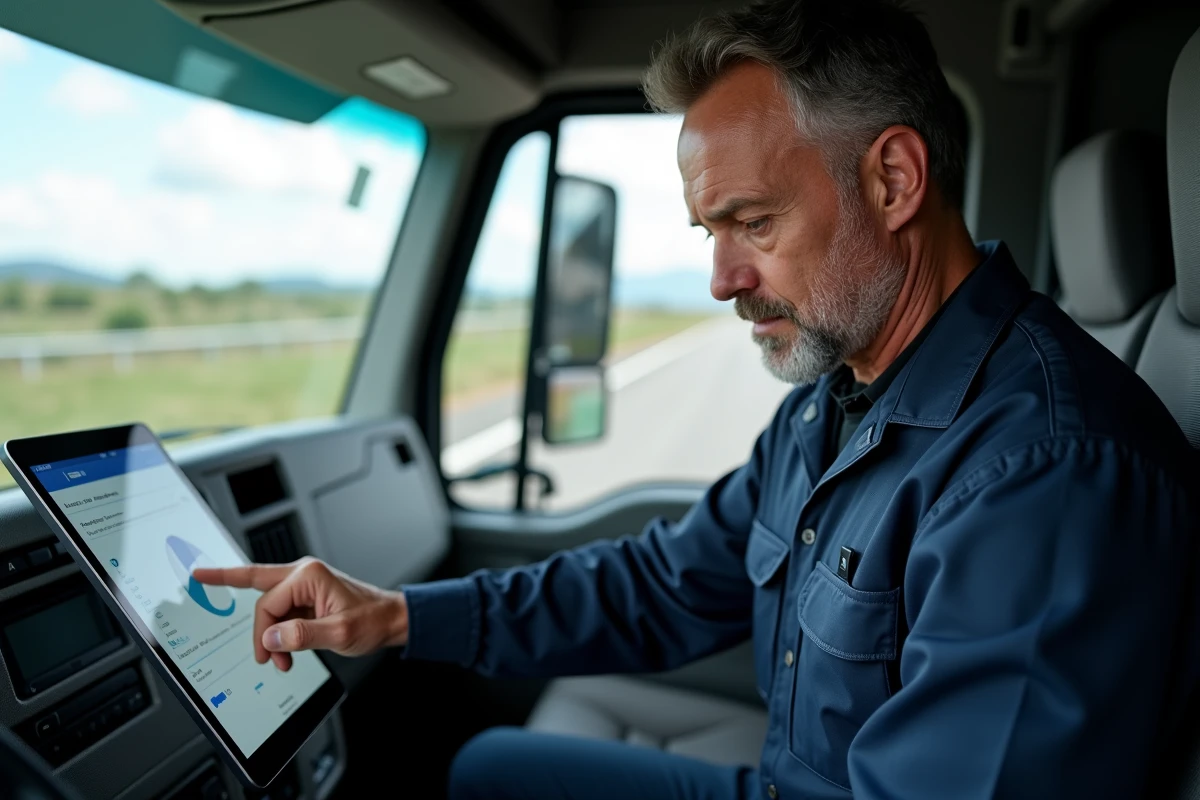
Optimizing operating costs does not always guarantee increased profitability for transport companies. The accumulation of data alone is not enough to improve safety or anticipate mechanical failures.
Between tedious traditional spreadsheets and digital tools sometimes reduced to their simplest form, companies in the road sector still have a wide margin for improvement. Intelligent systems no longer just promise; they transform the daily lives of managers, from regulatory compliance to safety and operational performance.
Fleet Management: Issues and Challenges for Road Professionals
Managing a fleet management system is much more than equipping with cutting-edge equipment. Every decision regarding the vehicle fleet carries weight: budget constraints, customer expectations, unforeseen realities on the ground. A fleet manager faces daily questions related to safety, total cost of ownership (TCO), regulatory deadlines, and even CSR. A single oversight or incident can upset this balance.
In this shifting context, managing the vehicle fleet must stay current despite economic uncertainty and rapid changes in mobility. Three priorities emerge for effective management:
- A detailed tracking of routes and fuel consumption
- Regular analysis of incidents to anticipate unforeseen events
- Maintenance anticipation to limit downtime and maximize vehicle availability
No data is trivial when it comes to defending a company’s profitability, reputation, and safety. To keep pace, a real dialogue must be established between the field, management, and drivers, leaving no room for “downtime.”
Digital solutions have disrupted the established order: automated data collection, centralized alerts, expanded visibility on the total cost of ownership (TCO). Adapting to sustainable mobility and compliance is no longer an “option.” For those who want to move forward in this direction and anticipate sector changes, simply learn more about Autoscope fr.
What Concrete Benefits Can Be Expected from a Digital Fleet Management Solution?
The digital age is no longer just about adding numbers to the table. With a modern fleet management solution, managers and executives gather all data from vehicles, drivers, and interventions on a platform that clarifies every aspect.
Among the tangible benefits of these new tools, we find:
- Instant supervision: real-time location, incident or maintenance notifications, everything is reported immediately. Result: fewer unplanned stops, limited risk of immobilization.
- Automated management of fuel, maintenance, or insurance: any deviation in fuel consumption triggers an alert, interventions are scheduled without waiting for a problem to escalate.
- Streamlined administrative files: easier management of in-kind benefits, quick renewal of registration documents, timely technical inspections. Gone are the stressful reminders and piles of paper documents.
Adopting a fleet management software is a step forward in performance: invisible costs no longer have a place, everything that matters becomes traceable, and every euro invested defends the company’s competitiveness. Guided by this data, strategic management becomes more precise and agile.

Key Features of Fleet Management Software: Focus on Performance and Safety
In daily operations, efficiency arises from rigor and the ability to anticipate. A fleet management software transforms the management of the vehicle fleet by automating the collection of vehicle data: mileage, maintenance deadlines, technical alerts. All these indicators are gathered in a dynamic dashboard, allowing action before difficulties arise.
Monitoring fuel consumption and mechanical condition is no longer left to chance. Through the analysis of KPI, every deviation, overconsumption, or oversight is automatically flagged. Engine diagnostic signals or maintenance alerts prevent unexpected stops and maximize fleet availability.
Here are the features that professionals truly expect:
- Automated reporting of each maintenance and regulatory check: no more missing deadlines, compliance becomes easier to maintain.
- Specific module for managing electric and hybrid vehicles: planning of charging, monitoring of range, continuous adaptation according to fleet type.
- Analytical tools for driver safety: detection of risky behaviors, recording of violations, integration of safety and eco-driving awareness modules.
Driven by data and automation, managing the total cost of ownership (TCO) becomes transparent: every decision is based on concrete evidence, every expense is justified. Fleet managers rely on this information to support the transition to sustainable mobility, enhance field efficiency, and protect their teams. The professional road leaves no room for approximation: the future is written with the support of reliable data, far beyond old reflexes and obsolete tools.